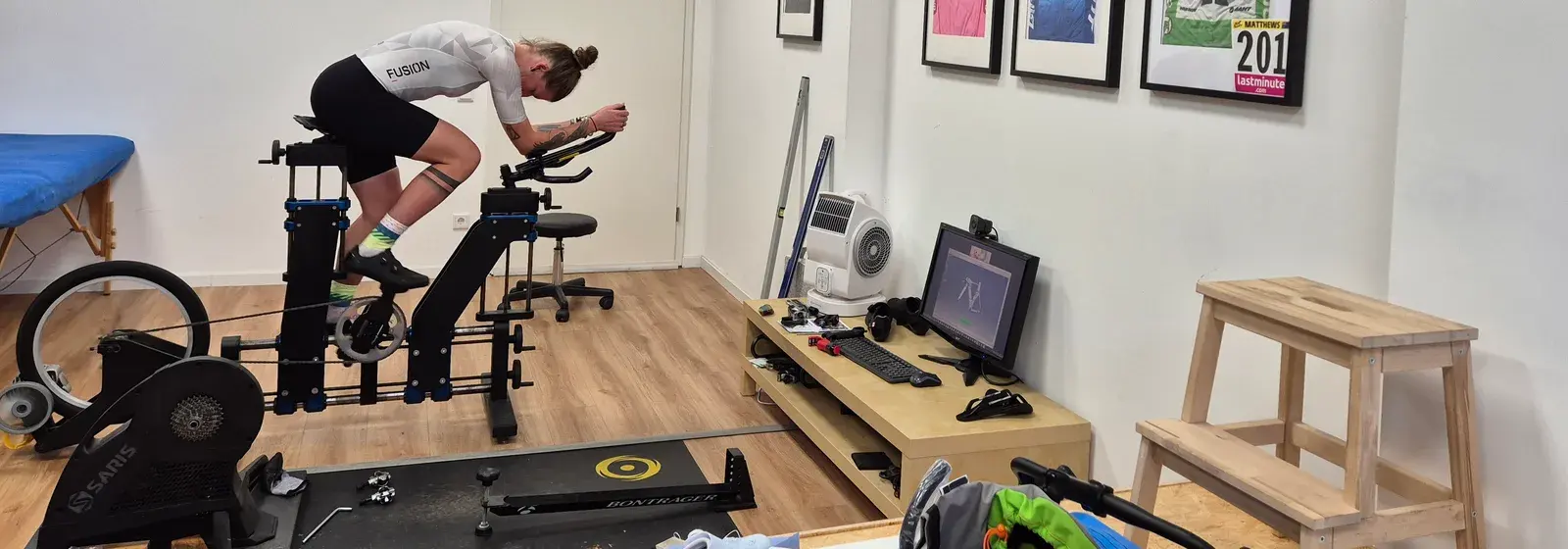
A custom frame is only as good as the numbers it is built from. If no production bike fits, or you have already decided to have one built, this session ends with a drawing rather than a recommendation.
What you end up with
Your position is worked out on the fit bike first, not estimated. From that data comes a dimensioned frame geometry: stack, reach, seat angle, head tube, cockpit and the components that have to match it.
The result is a document a framebuilder can work from without guessing.
When it is worth it
Not everyone needs a custom frame. It becomes worthwhile when production frames keep failing your proportions, when the position you need does not exist in your size, or when a custom build is already decided and the geometry should not be left to chance.
- production frames force permanent compromises on you
- the position you need sits outside the available geometries
- a custom build is already decided and deserves proper measurement
How the session runs
It runs like a full sizing session with a different output. Establish the position, verify it, derive the geometry.
- movement screening and position work on the fit bike
- target geometry derived from the measured values
- CAD drawing with the dimensions the frame has to meet
- guidance on cockpit, crank length and components
What comes next
You take the drawing to a manufacturer of your choice. Once the frame is built, the position is transferred to the real bike and refined.