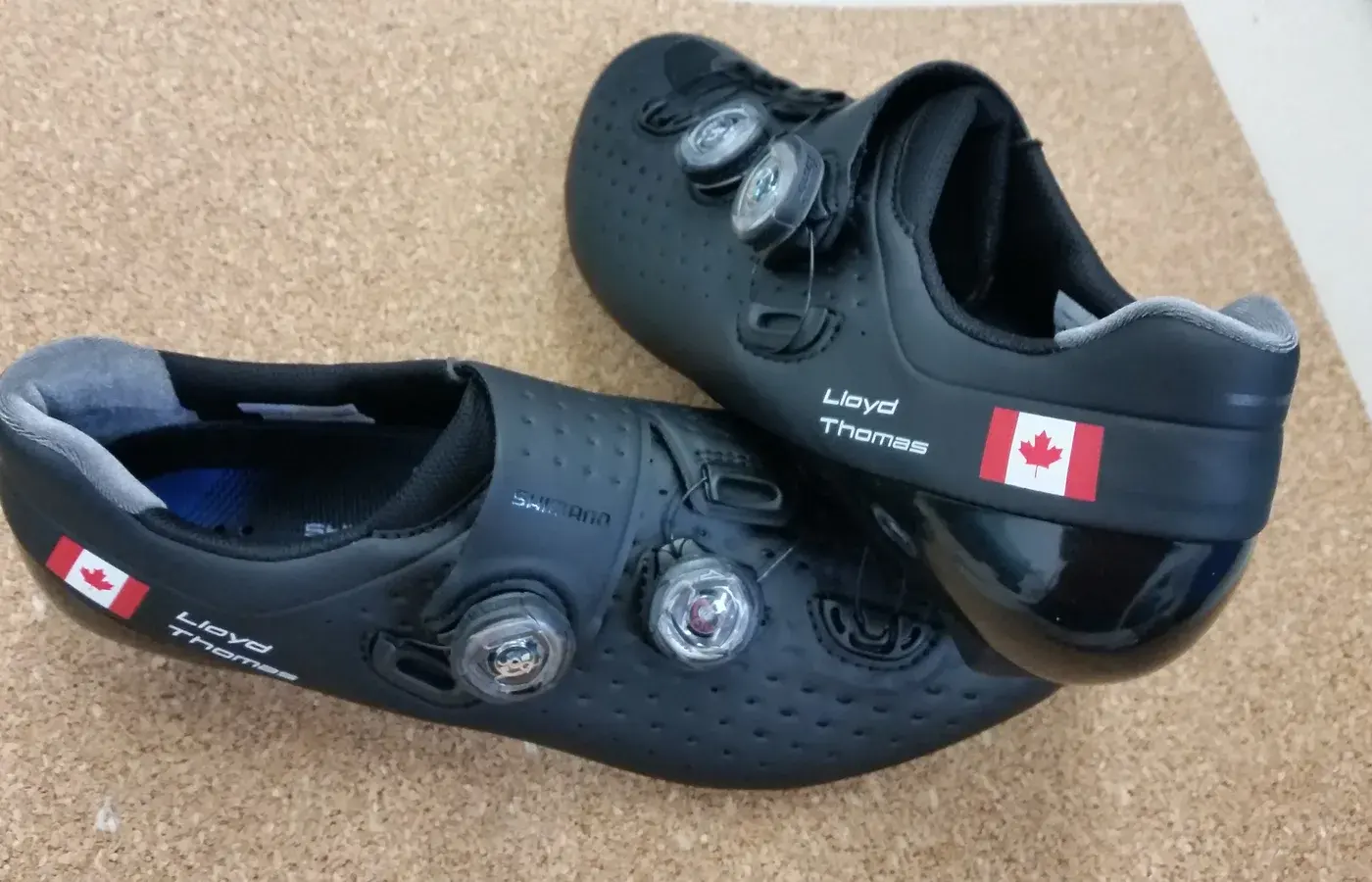
Cycling foot pain is often underestimated because it first looks like a simple shoe or cleat problem. In practice it usually reveals how much load is moving through the foot and how well or badly the whole setup is distributing that load.
You work directly with me, Lloyd Thomas. I assess how your foot is working, how the pedal system is loading it and whether saddle height, crank length and total load distribution are increasing the stress unnecessarily.
How cycling foot pain develops
Almost everything you produce on a bike leaves through an area about the size of a credit card. In walking or running, that load arrives as a series of impacts spread across the whole foot, and the foot gets to change shape between them. On a bike it is the opposite: a lower peak force, but applied through a small part of the forefoot, in a stiff shoe, clipped to a fixed platform, several thousand times without the foot ever really being allowed to move.
That is the mechanism behind most cycling foot pain. It is not usually a violent overload — it is a moderate pressure that never lets up, in a structure that normally relies on being able to spread and recover. The stiff sole that makes a cycling shoe efficient is also what stops the foot from redistributing pressure on its own, so wherever the load concentrates, it stays concentrated.
Heat and swelling make it worse as a ride goes on. Feet swell over hours, a shoe that fit at the start gets tighter, and pressure that was tolerable in the first hour becomes the main event by the third. Riders often read that as the shoe being wrong, when the shoe has not changed at all.
Common causes of cycling foot pain
Foot pain rarely comes from one simple detail. Cleat position, shoe fit, foot support, stance width, pedalling pattern and saddle height can combine to overload the forefoot, toes or arch.
That is why changing only shoes or only insoles often leaves the root cause untouched.
- cleats are too far forward or too far back
- the shoe does not fit the foot properly
- missing foot support increases pressure points
- too much load is going through the forefoot or toes
- shoe volume or width that stops the foot spreading as it swells
- pedalling pattern and saddle height amplify the stress
Two typical patterns: burning under the ball, and pain toward the heel
The first pattern sits under the ball of the foot. Riders describe burning or hot spots that build over a long ride, sometimes with tingling into the toes, usually worse in heat and on sustained climbs, and often relieved within seconds of loosening the shoe or standing up. This points at pressure concentrated across the forefoot — cleat position too far forward, not enough support under the arch, or a shoe that has run out of room.
The second sits further back, toward the heel or the base of the ankle, and behaves differently: less burning, more of a strain, and often at its worst on hard efforts or the first ride after a break. Here the question is usually how much work the ankle and calf are doing to drive the stroke, which makes it closely related to Achilles symptoms rather than a forefoot problem at all.
Telling these two apart matters more than any single measurement, because they move in opposite directions. Shifting cleats back tends to help the first pattern and is often exactly the right move for the second as well — but for quite different reasons, and alongside different changes to saddle height.
What you can check yourself before you book
Nothing here needs fixing before you come, and it does not replace an assessment. It just helps me narrow the picture quickly.
- Where does it sit: under the ball of the foot, in the arch, at the heel, or in the toes?
- Does it build over a long ride and ease when you loosen the shoe or stand up?
- Is it burning and tingling, or more of a dull strain?
- One foot or both — and is one leg generally the one that finds things harder?
- Does it also hurt walking around the day after, or only on the bike?
That last question is the most useful one. Symptoms that are purely on the bike point at the setup; symptoms that follow you into walking usually need looking at properly as well.
What I check during a foot pain bike fit
I start with off-bike movement and then analyse the position under load. I am not only asking where it hurts. I want to know why that part of the foot is being overloaded or losing support.
I do not just move the cleats and hope. I identify the change that will actually make the biggest difference in the full setup. Shoe fit comes first, because no amount of adjustment rescues a shoe that is too narrow or too shallow for the foot inside it once it has swollen. Then support under the arch, which decides whether the foot holds its shape under load or collapses and concentrates pressure. Then cleat position, fore-and-aft and rotational, which sets both the lever the calf has to work against and where load lands across the forefoot.
Saddle height gets checked alongside all of it. If the saddle is high, the foot tends to reach for the bottom of the stroke, the ankle does more work, and pressure moves forward — a foot symptom created some distance away from the foot.
- Numb Feet While Cycling
- Cycling Achilles Pain
- Cycling Knee Pain
- Cleat Position
- Saddle Height
- Bike Fitting in Bensheim
What a good solution should achieve
A good adjustment should reduce pressure in the foot and improve how power moves through the pedal. The problem should not simply be shifted into the knee, hip or saddle.
The useful outcome is a calmer, more supported foot rather than constant experimentation with shoes and inserts.
When a bike fit helps and when medical assessment still matters
A bike fit is the right route for foot symptoms that belong to riding: they arrive during a ride, they respond to loosening a shoe or changing position, and they are gone by the time you are walking around normally. That covers the large majority of cycling foot pain, and it is a pressure-and-support problem the setup can work on.
Other things deserve proper assessment first. Pain that is also there when you walk, sharp pain on the top of the foot or in a single spot that hurts to press, symptoms that keep you awake, numbness or burning that persists for days rather than hours, or a distinct clicking and shooting pain between the toes are not questions a cleat position answers. Nor is any foot pain that arrives after a fall or an awkward step off the pedal.
If you have a condition that already affects circulation or nerve sensation in the feet, treat persistent numbness as a reason to check in with your doctor rather than something to ride through, whatever the bike is doing.
The setup question underneath all of it is simple: is the same small area of your foot being asked to carry the same pressure on every single stroke?