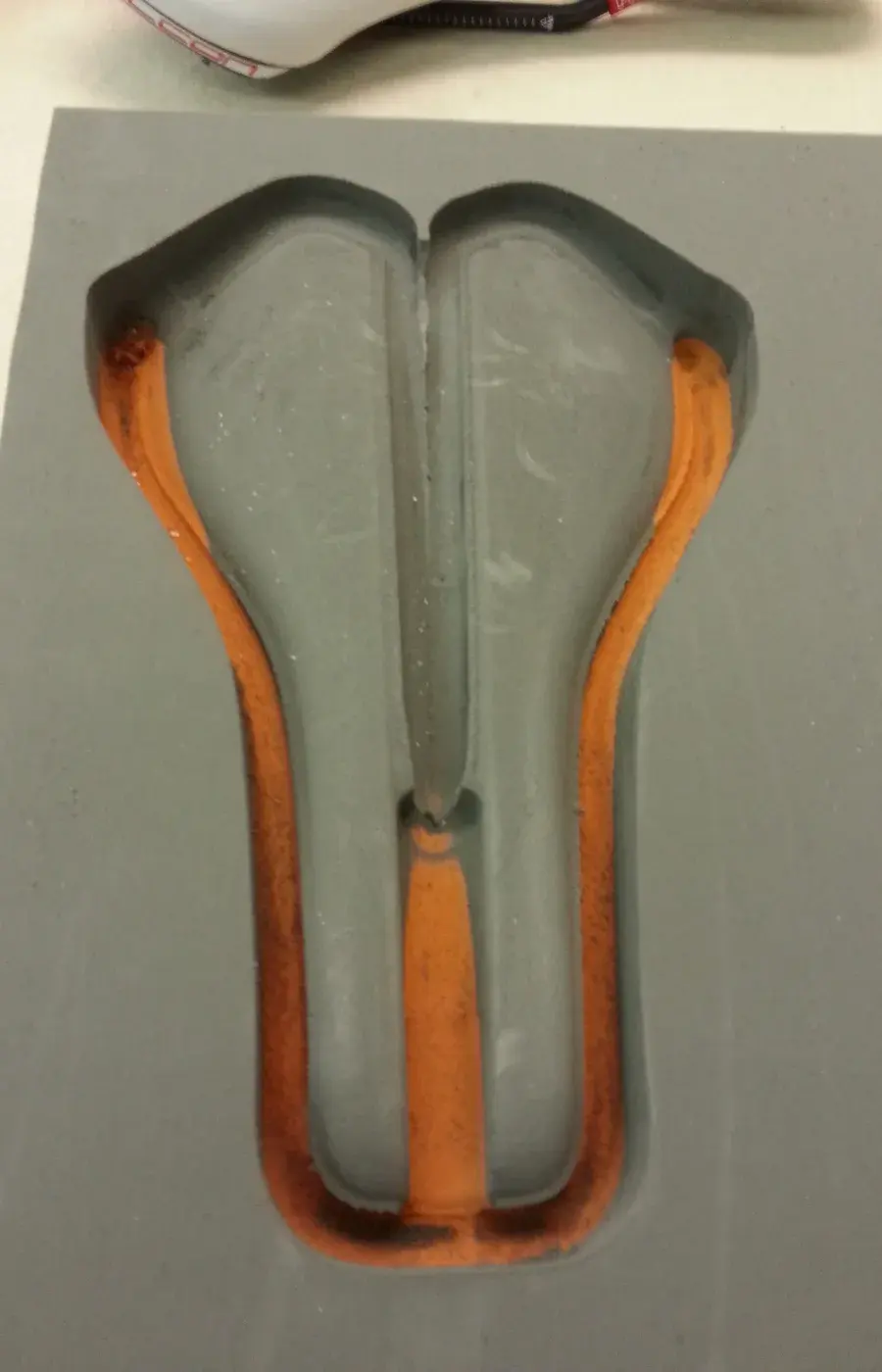
Cycling saddle pain is often treated too quickly as a simple saddle problem. In practice that is only part of the story. Very often the full load distribution is wrong: the pelvis becomes unstable, the reach pulls you forward or the position creates too much pressure and friction for the saddle to support you properly.
You work directly with me, Lloyd Thomas. I assess how your pelvis behaves under load and whether the bike is supporting you well enough for the saddle to work as intended rather than only chasing the painful contact point.
How cycling saddle pain develops
A saddle is meant to support you through the sit bones — two bony points that are built to carry weight. Everything between and in front of them is soft tissue: skin, nerves and blood vessels that are not built to carry any weight at all. When the setup is working, most of your load sits on the bone and that soft tissue is only lightly loaded. When it is not, the load moves forward off the bone and onto the tissue, and the difference in comfort is immediate and large.
Two forces do the damage, and they are not the same. Pressure is weight pressing straight down, and it is what compresses the nerves and vessels that produce numbness. Shear is the sideways and back-and-forth rubbing that happens when your pelvis moves relative to the saddle, and it is what produces chafing, hot spots and saddle sores. A saddle that solves one can easily make the other worse, which is why swapping saddles at random so often trades one symptom for a different one.
What decides which of them you get is mostly not the saddle. It is whether your pelvis is being held in a stable place. A reach that is too long tips you forward onto the soft tissue. A saddle that is too high makes you rock side to side to reach the bottom of the stroke, and every one of those rocks is shear. The saddle is where you feel the result, not usually where the cause lives.
Common causes of cycling saddle pain
Saddle pain rarely comes from one factor alone. Saddle height, setback, tilt, reach, pelvic control, clothing and riding posture can all influence pressure, friction and shear forces.
The goal is to identify the real driver of the symptom in your case instead of assuming the saddle itself must be wrong.
- saddle width or shape does not match the support you need
- the pelvis loses stability under load
- saddle height or setback creates unnecessary pressure
- saddle tilt that lets you slide forward off the sit bones
- too much reach pulls you forward and increases load on the saddle
- clothing or riding posture adds friction and shear
Two typical patterns: pressure and numbness, or friction and soreness
The first pattern is pressure. It shows up as numbness, tingling or a dead feeling that builds over a ride, usually eases within a minute of standing up, and is worst in a low or stretched position. This is soft tissue being compressed because weight has moved forward off the sit bones — and it is the pattern to take most seriously, because numbness is a nerve telling you it is being squeezed. Saddle width, tilt, reach and how far forward you are being tipped all matter here.
The second is friction. It shows up as rawness, chafing, hot spots or recurring sores rather than numbness, is often worse on rough surfaces and long rides, and tends to appear in the same place each time. This is movement between you and the saddle. The usual driver is a saddle a little too high, so the pelvis rocks to reach the pedal, and the fix is generally about stability rather than padding.
They can occur together, but the leading symptom tells you which one to solve first — and solving the wrong one is how riders end up with a drawer full of saddles.
What you can check yourself before you book
Nothing here needs solving in advance, and none of it replaces an assessment. It just makes the pattern much easier to place.
- Is it numbness and pressure, or rawness and rubbing?
- Does it ease within a minute of standing up out of the saddle?
- Do you find yourself sliding forward and pushing yourself back during a ride?
- Is it worse in a low position or on the drops than sitting upright?
- Does one side get it more than the other?
Sliding forward repeatedly is the single most telling observation. It usually means the saddle tilt, the reach or the height is quietly moving you off the part of you that is meant to be carrying the weight.
What I check during a saddle pain bike fit
I start with your movement off the bike and then analyse the position under load. I am not only asking where it hurts. I want to know why the system is losing support in that area.
The order matters. I do not just swap the saddle and hope it helps. I identify which change will actually make the biggest difference. Sit bone width comes early, because a saddle narrower than the structure it is meant to support cannot put load on bone however good it is. Saddle height and tilt come next, since they decide whether the pelvis stays still or rocks and slides. Reach and drop follow, because they determine how much of you is being tipped toward the front in the first place.
Saddle choice comes last, not first. Once the pelvis is stable and level, the requirements for the saddle are much narrower and much easier to meet — and that is a far better position from which to choose one.
What a good solution should achieve
A good adjustment should not only feel better for a few minutes indoors. The bike should feel more stable outdoors, pressure should be distributed more cleanly and you should be able to stay settled on the saddle for longer without constantly shifting around.
A useful outcome is cleaner support and calmer movement, not only less discomfort in one tiny area.
When a bike fit helps and when medical assessment still matters
A bike fit is the right route for the ordinary version of this: discomfort that builds during a ride, eases when you stand, and is gone the next day. That is a load-distribution problem, and moving weight back onto the sit bones is exactly what a fit is for.
Some things should not wait on a fit. Numbness in the genital area that does not clear quickly after you get off, any change in sexual function, or persistent pain in that region are signs of nerve or vascular compression and belong with a doctor — and in the meantime they are a reason to stop riding on that setup rather than to ride through it and see. This is the one symptom on the site where “carry on and monitor it” is the wrong advice.
The same goes for a saddle sore that becomes hot, hard, swollen or clearly infected, for skin that has broken down, and for any bleeding. Those need treating first; no adjustment helps a wound that is already there, and riding on it reliably makes it worse.
Once things have settled, changing the setup is what stops the same spot being loaded the same way on every ride — which is the part that decides whether it comes back.